A sort of I'm-probably-missing-the-point question in regards to Thomas Aquinas' "Summa Theologica:" when did we start referring to poetry as "art" and not "(the lowest) science"? And what's the difference between the two - art and science - to d'Aquino and his contemporaries, if any? We rarely refer to poetry as science anymore (though some schools of thought would see it as such), so when did the "art" definition apply? Just for historical tangent kicks, here goes.
I'm particularly impressed with Aquinas' rhetorical structure. A very logical, bare bones method of argumentation. I understand that this method was associated with Scholasticism, a movement which employed "the use of philosophical knowledge in explaining and defending the truths of faith" by fusing faith and reason. The material on this website, written by D.J. Kennedy, contends that Scholasticism has been wrongly associated with 'logic-chopping' and that it is, instead, "the highest form of intellectual activity and intellectual perfection; in the second place, for those who are Christians, it is of the utmost importance in explaining and defending the mysteries of faith." I suppose Aquinas' essay structure demonstrates one method of explaining faith with reason. This particular method also seems to most closely jive with our modern definition of 'science' - a step-by-step, ordered approach to logic-ing out.
Seems like, if these methods were highly prized as the perfection of intellectual activity, no wonder Aquinas considered poetry "the least of all the sciences" (240). Poetry doesn't always obey method. Poets aren't (necessarily) model logicians. Not by his standards.
Does our current "art" label allow for liberty of thought by exempting thinkers from following method? Often we seem to tout "creative liberty" as our get-out-of-jail-free pass. Sure, we learn methods of painting, sculpting, writing, composing, dancing. But we're usually expected to exercise this knowledge in unique and unconventional - not order-adherent - ways.
So, even though I know better contextually, I feel a tad peeved with Aquinas for referring to poetics as "the least of all the sciences." It's not even a science, I'd like to contend. Who's defining 'science' anyway?
Wednesday, April 30, 2008

Where soul meets body and we learn by signs

Several weeks ago I attended an inspiring lecture by poetry professor Christine Perrin during which she said (something to the effect of) "...The church needs this, too. Often we're told that truth can occur without beauty and the soul without the body. It's a lie." (For the complete - and accurate - quote read The Bridge magazine! There's a plug...) So lately I've been contemplating the relationship of the physical, corporal to the divine. Growing up I learned to distinguish between the purported binary oppositions of "spirit" and "flesh," reciting "The spirit is willing but the flesh is weak" ad nauseam. Now, cognitively, I understand that the "flesh" refers to sinful nature, but, habitually, I still associate flesh - evil, sin - with everything corporal, physical. Assuming the things of this world are inherently tainted. I wonder if this is true.
From friends and lectures I've gleaned enough to know - and be intrigued by - Professor Perrin's emphasis on physical images. (Here's where I might diverge from her theory - I don't know enough to say) See, even in writing that sentence I'm tempted to type "emphasis on physical images to point to higher truth" . . . but what if the images are the higher truth? What if the physical world - the body, say - isn't comprised of mere symbols to stand for higher truth, but in itself is higher truth? Or, what if we need the body, not merely to enhance or house the soul, but because the soul is, in fact, nothing without the body?
Augustine writes about the value of signs, writing "things are learned by signs" and "A sign is a thing which causes us to think of something beyond the impression the thing itself makes upon the senses" (188). Even as I read I nod in agreement, concurring that, yes, Jesus' 'body and blood signify what he wished', and, yes, 'when the woman was healed by touching the hem of His garment, something was signified' (189). But what if those physical occurrences didn't just signify revelations but were, in fact, revelations themselves? That the physical act of touching Jesus' robe transformed the woman, not that the touching symbolized a higher transformation.
(I can hear my Sunday School teacher correcting me, "The woman wasn't transformed by the act of touching - Jesus wasn't magical as we think of it. She was transformed because she believed." I'm not asserting that Jesus' robe possessed magical powers. More like: the woman needed to touch, to act, to use her body, in order to believe. Something physical had to happen.)
We often quote "Faith without works is dead," where 'works' means 'action.' The popular interpretation is something like, 'It's not enough to believe. One must act on that belief." Essentially, one who professes belief must confirm it, do it, with the body. The corporal is integral to belief. The corporal maybe is belief.
We Christians often refer to corporal things - our aging bodies, frequently - as just 'signs of things to come' or 'shadows' or sub-par versions of the 'new bodies' that await us in Heaven. As if these 'shells' only house our spirits for the time being and will be discarded upon acquiring a more perfect model. But what if the connection between our bodies and our souls is, actually, a more integral connection? What if they can't be separated? What if they shouldn't be separated, cognitively, theologically, or otherwise?
A more articulate wording: "To put it simply, all the body is in the soul, and all the soul is in the body. Or, in chemical terms, if sodium is absorbed by human beings, they die. If chloride is absorbed into the human body, people die, however sodium chloride, or table salt, as two principles of being can be absorbed into the human system at will without any damage. Therefore, salt is proof positive of substantial change."
Maybe our souls can't understand without our bodies, and our bodies can't understand without our souls?
Neither one points to another, higher 'thing' to aid the other. They just exist together, a whole.
I wonder, does anyone know of any writings that pertain to this inquiry?
Tuesday, April 29, 2008
How to be a discerning reader?
Professor Powers' essay "Reading Ethnic Literature Now," reminded me of a comment from a high school journalism professor and prompted a few questions. Powers writes, "the real problem for ethnic literary studies . . . is not the unsympathetic reader who misses cultural references, remains ignorant of cultural contexts, or simply can’t escape his or her cultural prejudices. The biggest problem is the vast and growing sea of non-readers who can’t imagine why reading a book ought to be an important thing to do in the first place." I suppose few would deny the declining trend in reading practices. Readers are rarities these days, it seems. Many people - I'm guilty too, more often than I'd like to admit - consider it laudable to accomplish the reading of anything at all, be it People magazine or a Danielle Steel.
Reminds me of a moment when, after the Harry Potter craze motivated non-readers of all ages to delve into books, my high school journalism teacher found herself fielding questions about the morality of allowing her elementary-aged boys to read the popular series. She responded simply, "This is the first time ever that my child has wanted to read. At all. To me, that's worthwhile."
The morality of Harry and his wizarding habits aside, I wonder if my teacher's logic holds weight. Does it matter what we read, or matter simply that we're reading? In my critical analysis essay I argue that Kolodny offers a more effective method than Emerson for dealing with skepticism of reading: rather than avoid it entirely, read more. Does that logic apply even in these instances? I suppose, in my essay, I assumed that the readers Kolodny imagines are scholars of literature, familiar with the canon and discerning of literary value. They, perhaps, can afford to read more. But what of the less discerning readers? Should they read more, or, in doing so, do they run the risk of 'spoiling' their literary intake? The 'Garbage in, Garbage out' adage.
And, if only discerning readers should increase the variety of literary diet, when does a reader become discerning enough?
Reminds me of a moment when, after the Harry Potter craze motivated non-readers of all ages to delve into books, my high school journalism teacher found herself fielding questions about the morality of allowing her elementary-aged boys to read the popular series. She responded simply, "This is the first time ever that my child has wanted to read. At all. To me, that's worthwhile."
The morality of Harry and his wizarding habits aside, I wonder if my teacher's logic holds weight. Does it matter what we read, or matter simply that we're reading? In my critical analysis essay I argue that Kolodny offers a more effective method than Emerson for dealing with skepticism of reading: rather than avoid it entirely, read more. Does that logic apply even in these instances? I suppose, in my essay, I assumed that the readers Kolodny imagines are scholars of literature, familiar with the canon and discerning of literary value. They, perhaps, can afford to read more. But what of the less discerning readers? Should they read more, or, in doing so, do they run the risk of 'spoiling' their literary intake? The 'Garbage in, Garbage out' adage.
And, if only discerning readers should increase the variety of literary diet, when does a reader become discerning enough?
'God as author' and other considerations
Recently I've read two intriguing articles concerning the 'God as author' simile.
The first, by World magazine columnist Gene Edward Veith, refutes the popular comparisons to God as watchmaker or carpenter. Veith calls to attention to the metaphors of God as writer throughout the Bible - see John 1:1-14, Hebrews 11:3, and Revelation 20:12-15, for example - and contends that the God-as-writer metaphor is most appropriate. He bases his argument, essentially, on this concept: "While a watchmaker is detached from the mechanism he crafts, an author is both outside his creation and his characters and intimately involved with them." According to Veith, then, authorship is wrapped up, fully engaged, an integral part of a work.
The second article, Theology is Stranger Than Fiction: The best film you didn't see this year, by Messiah professors Sharon Baker and Crystal Downing, essentially agrees with Veith. Baker and Downing analyze the theology in Will Ferrell's movie "Stranger Than Fiction," calling attention to the blurred control relationship between author/narrator Kay Eifel and her protagonist Harold Crick (Ferrell). Baker and Downing write, "Not too far into this provocative film, however, we begin to wonder who exactly controls Harold's life: Harold, who programs his watch and obsessively counts all his footsteps, or the narrator, who tells his story?"
I affirm the metaphors asserted in these articles. The connections are easy for me to see when they relate to God's involvement in my life - the "yes, he's writing my story" type of affirmation. But, if God's authorship of the Bible - even of our very lives - can be considered so integral, can secular authors be considered similarly connected to their work? Even in today's literary criticism class we noted a definite shift in thinking as we transferred 'tried and true' literary principles to the Bible. Why don't the same principles - of analysis, of interpretation, etc. - apply? Some argue the Bible's divinely inspired nature requires different readings. Yet Emerson believed his writing - his very nature as Poet? - evidence of inspired existence. Why do we react so strongly against Emerson? If we argue, as we often do, that the Bible can be studied as literature, are we essentially asserting that it also cannot be studied as literature? Is literary criticism the only way to approach Biblical interpretation?
The first, by World magazine columnist Gene Edward Veith, refutes the popular comparisons to God as watchmaker or carpenter. Veith calls to attention to the metaphors of God as writer throughout the Bible - see John 1:1-14, Hebrews 11:3, and Revelation 20:12-15, for example - and contends that the God-as-writer metaphor is most appropriate. He bases his argument, essentially, on this concept: "While a watchmaker is detached from the mechanism he crafts, an author is both outside his creation and his characters and intimately involved with them." According to Veith, then, authorship is wrapped up, fully engaged, an integral part of a work.
The second article, Theology is Stranger Than Fiction: The best film you didn't see this year, by Messiah professors Sharon Baker and Crystal Downing, essentially agrees with Veith. Baker and Downing analyze the theology in Will Ferrell's movie "Stranger Than Fiction," calling attention to the blurred control relationship between author/narrator Kay Eifel and her protagonist Harold Crick (Ferrell). Baker and Downing write, "Not too far into this provocative film, however, we begin to wonder who exactly controls Harold's life: Harold, who programs his watch and obsessively counts all his footsteps, or the narrator, who tells his story?"
I affirm the metaphors asserted in these articles. The connections are easy for me to see when they relate to God's involvement in my life - the "yes, he's writing my story" type of affirmation. But, if God's authorship of the Bible - even of our very lives - can be considered so integral, can secular authors be considered similarly connected to their work? Even in today's literary criticism class we noted a definite shift in thinking as we transferred 'tried and true' literary principles to the Bible. Why don't the same principles - of analysis, of interpretation, etc. - apply? Some argue the Bible's divinely inspired nature requires different readings. Yet Emerson believed his writing - his very nature as Poet? - evidence of inspired existence. Why do we react so strongly against Emerson? If we argue, as we often do, that the Bible can be studied as literature, are we essentially asserting that it also cannot be studied as literature? Is literary criticism the only way to approach Biblical interpretation?
Friday, April 25, 2008
To edit or not to edit, 'tis the question

A ha! I spot notes of Cixous-esque feminism.
Cixous references the circular form of feminist writing as opposed to masculine linear writing; plot structures, for female writers, follow revolving circular structures, while male writing follows the traditional exposition-rising action-climax-denouement-resolution sequence. Indicative, she argues, of the male vs. female sexual experiences and anatomies.
Other critics aren't far behind her. Kolodny references a distinction between male and female writing in her essay "Dancing Through the Minefield," and Woolf argues that male writers could use more 'female' influence in their writing.
So when I read this in an article about Arundhati Roy's (pictured left) post-colonial Indian novel The God of Small Things, I rejoiced over the connection: "Arundhati Roy made the point that her work had been conceived as a single defining image, and subsequently written out of sequence: ‘‘I didn’t start with the first chapter or end with the last . . . . I actually started writing with a single image in my head: the sky blue Plymouth [car] with two twins inside it, a Marxist procession surrounding it. . . . [The story] just developed from there." True to Roy’s non-linear method, this ‘‘single image’’ is divided across the second chapter of the novel, forming the centre-piece of a
larger episode which recounts a family outing to Cochin in the southern Indian state of Kerala. . ."
So Roy ascribes to what feminist critics consider a feminist plot structure. At least in this novel. Very cool. Post-colonialism feminism at its finest.
Another interesting thing about Roy: she doesn't revise. That's right, check it out here. She doesn't self-edit. To her, writing is like breathing, and, as I've read her quoted, "[she] would never edit out a breath." And that makes me wonder, why so much emphasis on editing in our modern curriculum? It's so contrary to stream-of-consciousness method. As an idealist (and as a first glance reaction), I appreciate Roy's everything-that-makes-the-page-is-legitimate ideology. Yet, in our current writing curriculum, we're teaching our budding writers to discard potentially-legitimate thoughts. Are we teaching them to refine or teaching them to devalue?
And so, what is a writer? One who shapes a multitude of thoughts or one who offers the multitude to readers for their own sorting?
What does that mean exactly, "post-colonial"?
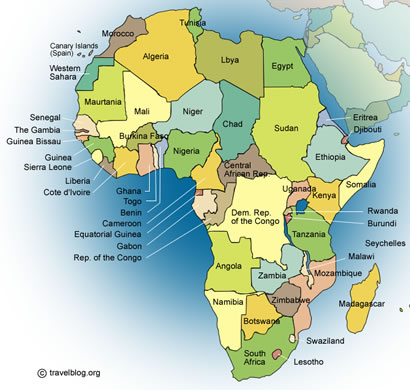
Seems like many literary critics have a bone to pick with the term "post-colonial." A post on Emily's blog prompted me to read this Paul Brians article on the term's inadequacies. Even in my post-colonial (with the hyphen or without? that's what I'd like to know) literature class, Professor Dzaka references the label's inability to include and span, the numerous cultures to which it literally implies. That is, if we were to pare the word down to its nitty-gritty, technical semantics, we'd have to admit that even our Northern American literature is "post-colonial:" we had colonies, now we don't. We were colonized - well, the Brits controlled our colonies? - and now we aren't.
(Ok, not the same thing, many argue. Still, the point stands.)
Yet, as our somewhat comprehensive literary swoop has demonstrated, most postcolonial literature involves India, the African continent, the Caribbean islands, and parts of Asia. 1) As if colonialism is over in these locations. To which Brians, like many other critics, challenges "What about neocolonialism?" and 2) As if an entire era of literature is Eurocentric.
This is Brians' point, not mine. He writes, "it can be argued that this way of defining a whole era is Eurocentric, that it singles out the colonial experience as the most important fact about the countries involved. Surely that experience has had many powerful influences; but this is not necessarily the framework within which writers from--say--India, who have a long history of precolonial literature, wish to be viewed."
Perhaps this is what writers like Ngugi hope to preserve: a sense that their colonization did not - does not - define their national literary identity. Not all African literature is "postcolonial." Nor is it either "precolonial" and "postcolonial." Even if Kenyan universities were to study African literature, studying African literature through English lenses - always in reference to the English dominance or lack of dominance - would be "Eurocentric."
So how do literary scholars - particularly Euro-descending scholars - study this undoubtedly important era in literary history without limiting formerly-colonized nations to Euro-referencing works? How do we allow formerly-colonized nations their own literary identities?
By legitimizing works written in native tongues (rather than a 'standard' English)?
By valuing themes of rebellion against oppressive forces as indicative, over all else, of "postcolonialism"?
Perhaps, as overseas business furthers neocolonialism, we'll need to revisit and revise our current nebulous definition of post-colonial literature.
Thursday, April 24, 2008
A response to Ngugi and the "English" department label

One of my sister's favorite arguments for implication is, "Like the book of Esther: it's all about God, but it never mentions him once. Still, he's all over it."
I think about her point every time I hear a Messiah College English student complain about the curriculum's lack of Christian faith. How much more explicitness would you like, that's what I want to ask. Seems to me that the literary discussions in our classes involve and allow and weave Christianity integrally - need it be spelled out more specifically? Sometimes, to me, the need for explicitness seems developmentally immature, like toddlers who need to be told "No, that's bad" or "Don't touch" in definite terms so as not to misunderstand. Need we label "This book is About Jesus" or "This is Christian Literature" to prevent our misunderstandings? Need we categorize Christian literature the same way we categorize British, African, or any other national literature? I would like to imagine Christianity as more pervasive, more transcendent than that.
Once I heard Don Forsythe, art professor, speak about the relationship between his Christianity and his art. A student asked "Is it difficult to be both a Christian and an artist," as if the two were mutually exclusive. He responded something to the effect of "I don't think my art needs to be explicitly evangelical to be considered 'Christian.'" I liked that. We don't necessarily need to label our work, our study, as such in order for it to be so. The mere fact that we are Christians means that our studies will inherently involve Christianity. We cannot escape it. It's like asking, 'Is it difficult to study literature being you?' - How can it be any other way?
So I'm not sure it's necessary to label our literature studies as "Christian." We are Christians who do literature study. We read and write and analyze out of our Christianity. How else could we? Just like we read and write and study out of our gender identities, our cultural identities, our national identities. We are, and that inherently is our study.
Perhaps, in response to Professor Powers' proposed department changes, we could nix the "English" label and call the department "Literature and Writing." Maybe that would eliminate the colonized/colonizer context issue of which Ngugi writes. It would certainly allow, if in definition only, a more comprehensive scope of subject matter. But to go a step further and label the department "Christian Cultural Studies" would be ending up right back where we started. From one limiting label to another. It'd be superfluous, I think. That's what we are at this institution, why should we label the department as such? (And, if our department labels itself in such a way, then will the mathematics department label itself similarly? "Christian Mathematics" or "Number Configurations According to Christianity"?) Labeling it, being too specific, might limit the scope to evangelical and apologetic material, just like labeling a department "English" might limit the study to only colonizer literature.
An interesting issue, this one. I'm sure I haven't explored it entirely. For now, I'll just mull over it.
Subscribe to:
Posts (Atom)